
SEO
How SoulUp Turned SEO Into a Compounding Growth Engine
Words from the Founder
The Revenify team worked with us like an extension of SoulUp. They were thoughtful about the category, quick with execution, and clear about what needed to be built next. What we appreciated most was the balance of strategy and consistency — building pages, improving structures, tightening internal links, and constantly looking at what was actually moving leads and revenue. That rhythm made the growth compound.
Punita Mittal, Co-Founder, SoulUp
At a glance
+249% | +92% | +154% | +127% |
increase in B2C revenue | increase in non-blog SEO traffic | increase in unique leads | increase in search impressions |
The challenge
SoulUp operates in a category where people are not looking for generic content alone. They are searching for clarity, self-understanding, the right therapist, the right support group, or the next step in a deeply personal mental-health journey. The opportunity was to move SEO beyond scattered publishing and turn it into a more dependable growth system across discovery, trust, and conversion.
The Revenify approach
We treated SEO like a product and growth engine. That meant building around user-intent journeys rather than search volume alone: self-assessments, support-group pages, therapist and recommendation journeys, and condition-led templates that could capture demand closer to decision-making. Alongside content and page expansion, we tightened technical discoverability, strengthened internal linking, and made reporting accountable to traffic quality, leads, and revenue.
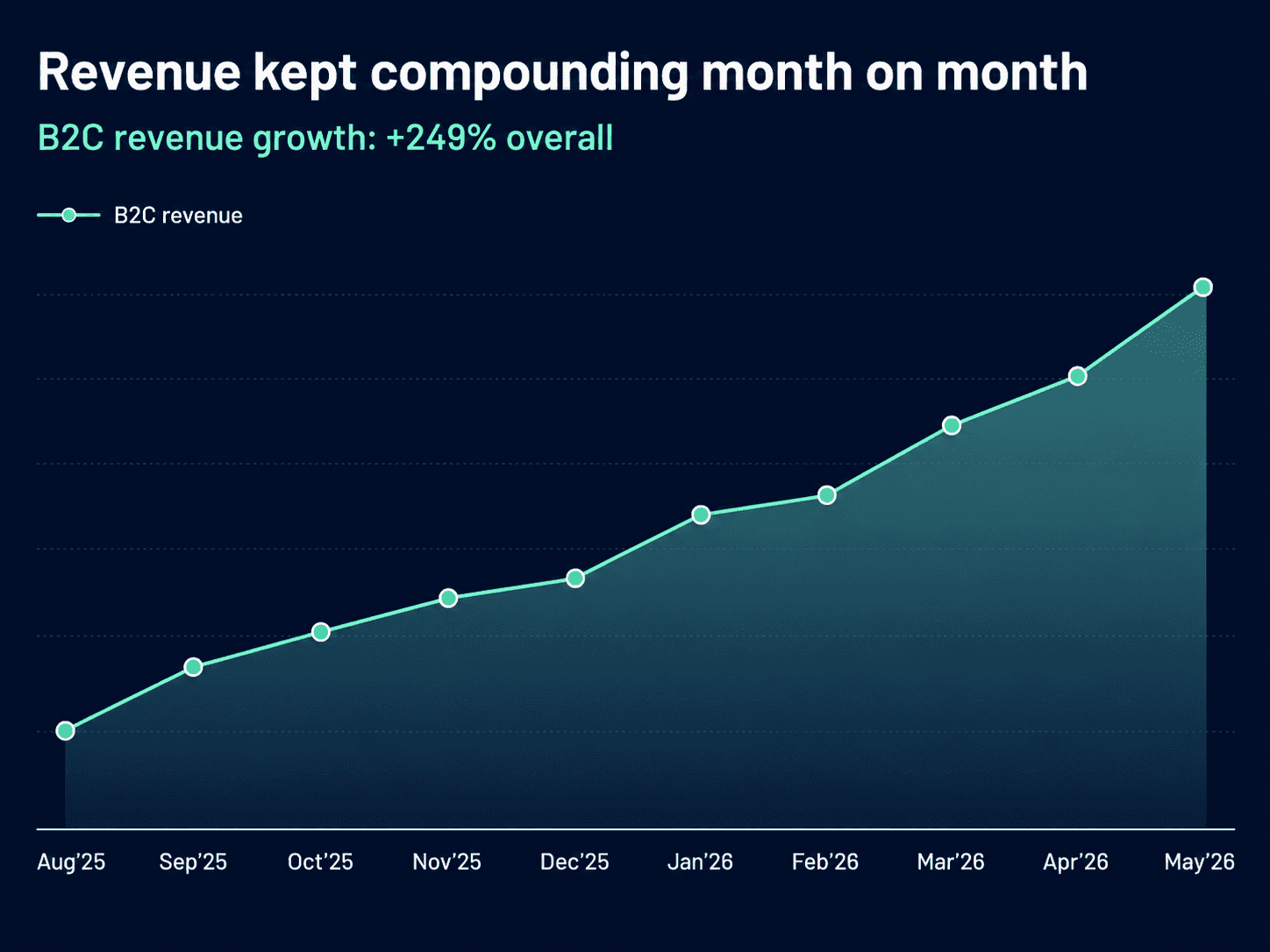
Revenue movement month on month
The results
Metric | Change |
B2C revenue | +249% |
Search impressions | +127% |
Total traffic | +70% |
Organic traffic | +92% |
Total organic traffic | +77% |
Non-blog SEO traffic | +92% |
Average page position | Improved by 7.9 positions |
Keywords in Top 3 | +6683% |
Keywords in positions 4–10 | +187% |
Unique leads | +154% |
Therapist recommendation leads | +492% |
What we changed
Built SEO around high-intent mental-health journeys, especially self-assessments, support-group collections, and therapist-related discovery pages.
Expanded page coverage across core categories such as depression, anxiety, ADHD, grief, loneliness, postpartum support, and other life-stage or condition-led journeys.
Improved the technical foundation through better page structures, internal linking, discoverability, and cleaner paths for search engines to crawl important commercial pages.
Created a tighter feedback loop across visibility, traffic, lead movement, and B2C revenue so the team could prioritize what was genuinely compounding.
Started tracking emerging AI-search visibility across answer engines to understand where SoulUp was already being surfaced outside traditional search.
Lead quality started improving, not just traffic
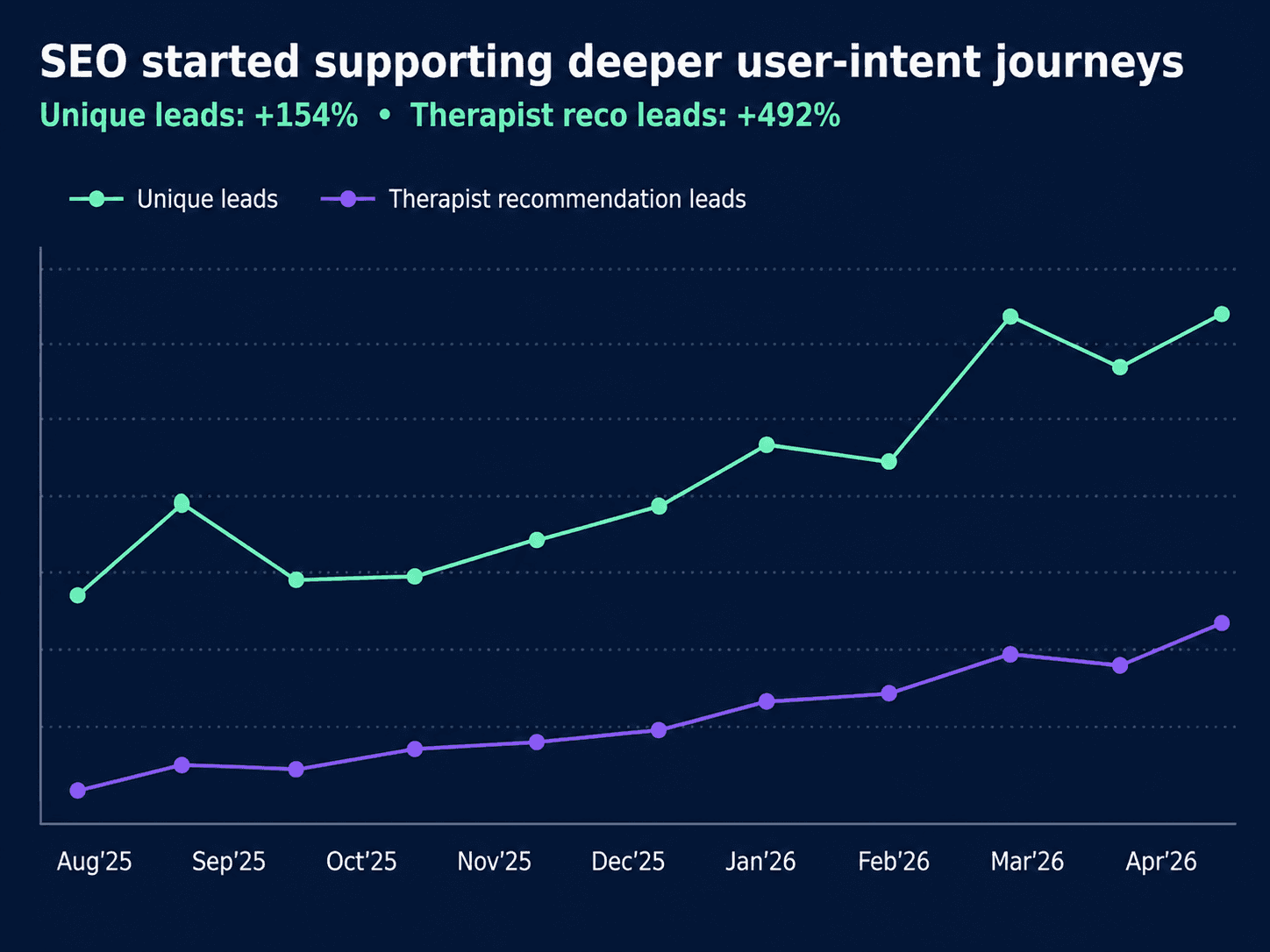
The clearest signal was that SEO began feeding deeper user-intent journeys. Over the tracking window, unique leads grew 154%, while therapist recommendation leads grew 492%. That matters because it shows SoulUp was not just becoming easier to find — it was becoming more useful at the moment people were ready to take the next step.
Search visibility and traffic quality
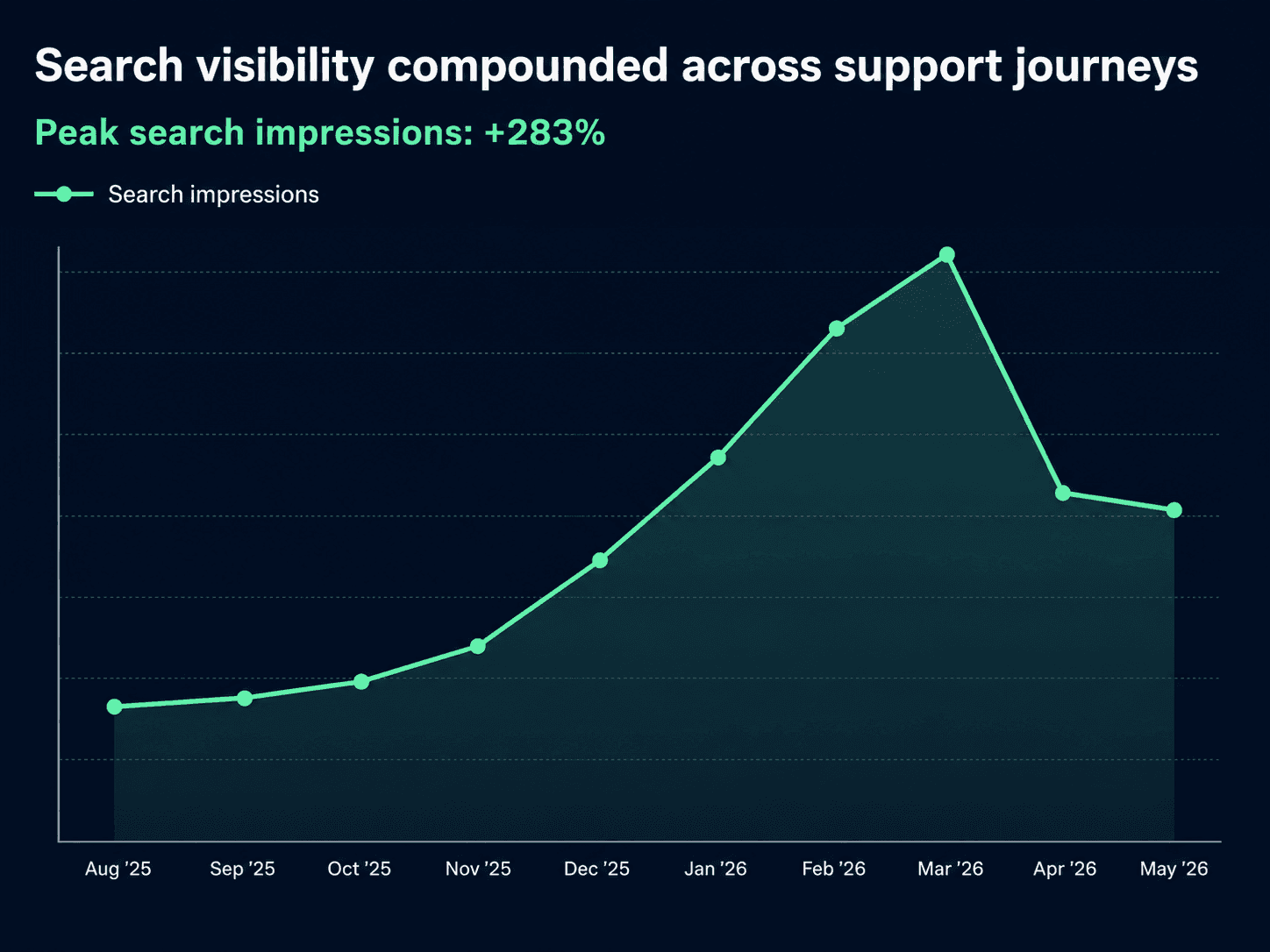
Search impressions increased 127% from August 2025 to May 2026, and the growth curve peaked even higher in March. More importantly, non-blog SEO traffic — the part of organic traffic most closely tied to product and conversion journeys — increased 92%. This is a strong signal that SoulUp’s growth came from commercially useful pages, not just informational traffic.
Organic traffic mix
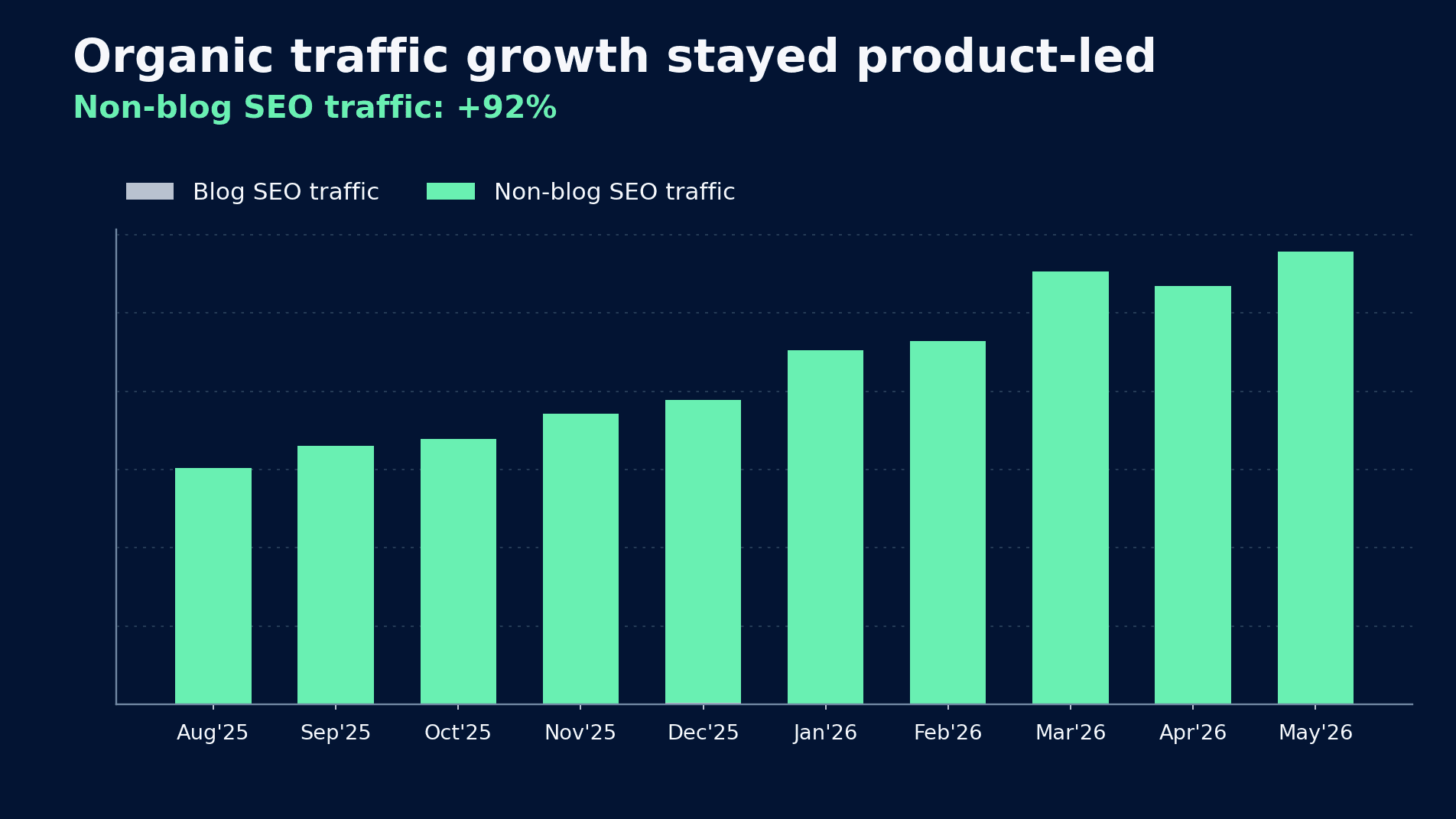
Traffic growth stayed anchored in non-blog SEO pages, showing that SoulUp’s core product and collection pages were doing more of the heavy lifting over time.
Ranking expansion across core categories
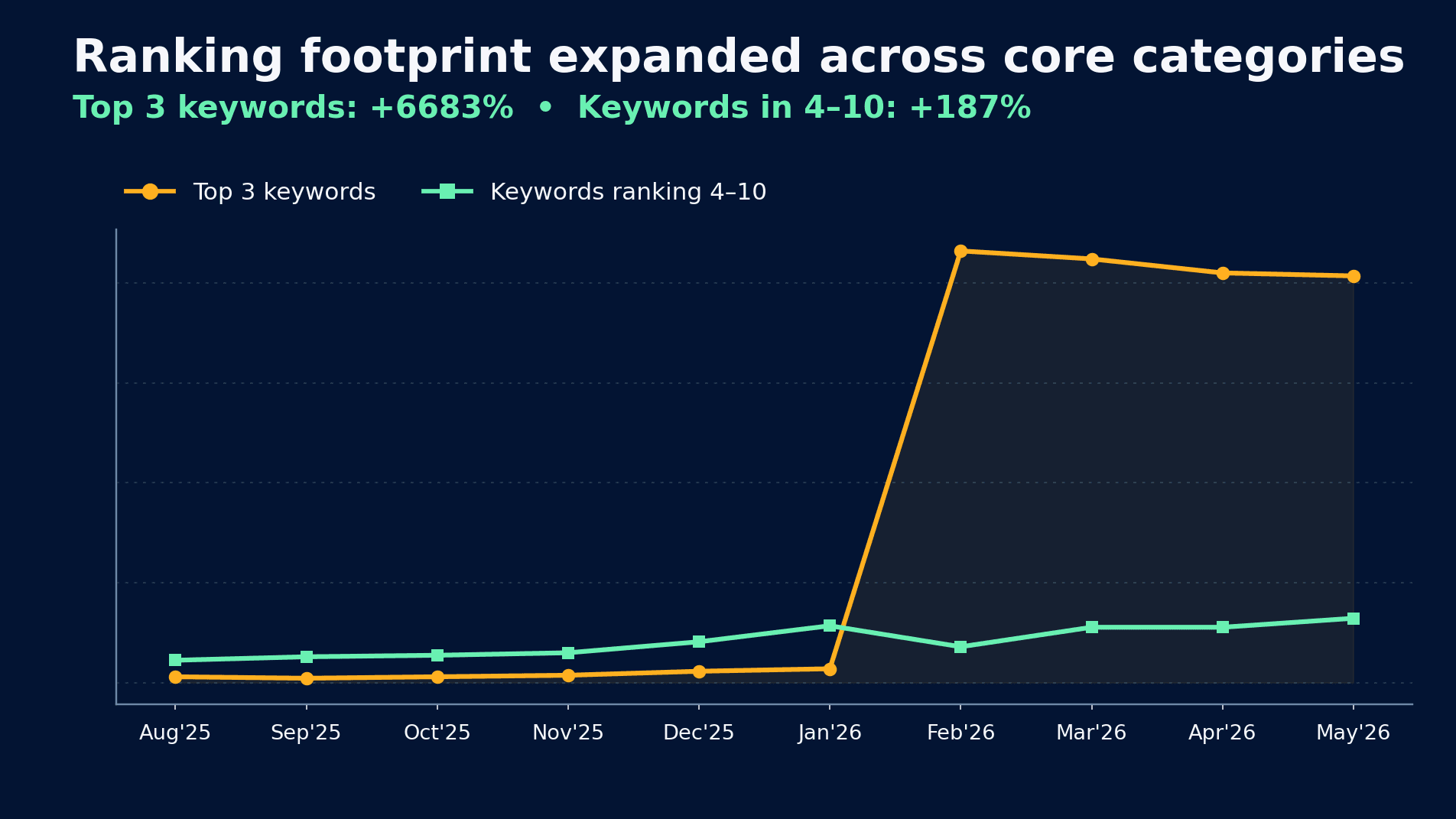
Keyword coverage expanded sharply across the categories SoulUp cared about most. Top 3 keyword visibility rose from a small base to a much larger footprint, while keywords ranking in positions 4–10 nearly tripled. In practice, this meant SoulUp started appearing much more often for the journeys it wanted to own.
Average position improvement
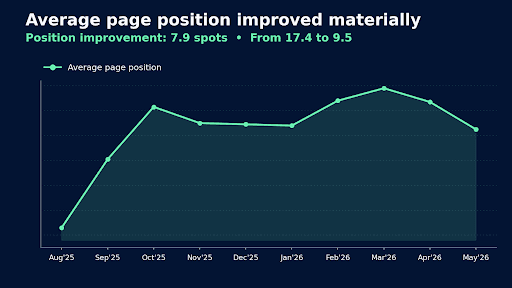
Average page position improved from 17.4 to 9.5 across the reporting window — a gain of 7.9 positions. That improvement helped more pages move from being present in search to becoming meaningfully visible and clickable.
What this means
The most useful outcome was not traffic in isolation. SoulUp improved the quality of its organic growth: more non-blog traffic, stronger lead movement, better therapist recommendation journeys, and a clear revenue story. That is what makes the work scalable. SEO started behaving less like a reporting exercise and more like a repeatable acquisition system.
Impact
SoulUp now has a stronger organic base across self-assessment, support-group, and therapist discovery journeys. With better rankings, healthier page coverage, stronger traffic quality, and a measurable link to B2C revenue, the business is in a much better position to keep compounding through new page launches, content refreshes, technical improvements, and conversion-led experiments.
Working like a true team
The pace of execution mattered here. SoulUp’s willingness to keep shipping pages, act on feedback, and build around real user intent gave the strategy room to compound. That consistency is what turned SEO into a more dependable growth channel.
Contact
Let’s talk about growing your revenue, not just your traffic.
Exploring SEO, fractional help, or an audit? Let’s talk.